
Power Your Home with the Sun: A Comprehensive Guide to On-Grid Solar Systems in India
Harnessing the sun's energy with a rooftop on-grid solar system is an increasingly popular and economically savvy choice for Indian homeowners. With rising electricity tariffs and attractive government incentives, switching to solar not only contributes to a greener environment but also promises significant long-term savings. This guide delves into the prices, subsidies, return on investment (ROI), and working principles of on-grid solar systems for homes in India.
Understanding the On-Grid Solar System
An on-grid solar system, also known as a grid-tied system, is a solar power generation setup that is connected to the local utility grid. Here’s a simple breakdown of how it works:
- Solar Panels: Capture sunlight and convert it into Direct Current (DC) electricity.
- Solar Inverter: Converts DC electricity into AC electricity for household use.
- Net Meter: Records both imported and exported electricity.
- Grid Connection: Synchronizes with the local electricity grid.
During the day, your home first uses the electricity generated by the solar panels. If the generation is more than your consumption, the surplus power is exported to the grid. At night or on cloudy days, when solar generation is low, your home seamlessly draws the required electricity from the grid. This two-way flow of electricity is managed by the net meter.
The Working of an On-Grid Solar System for Home
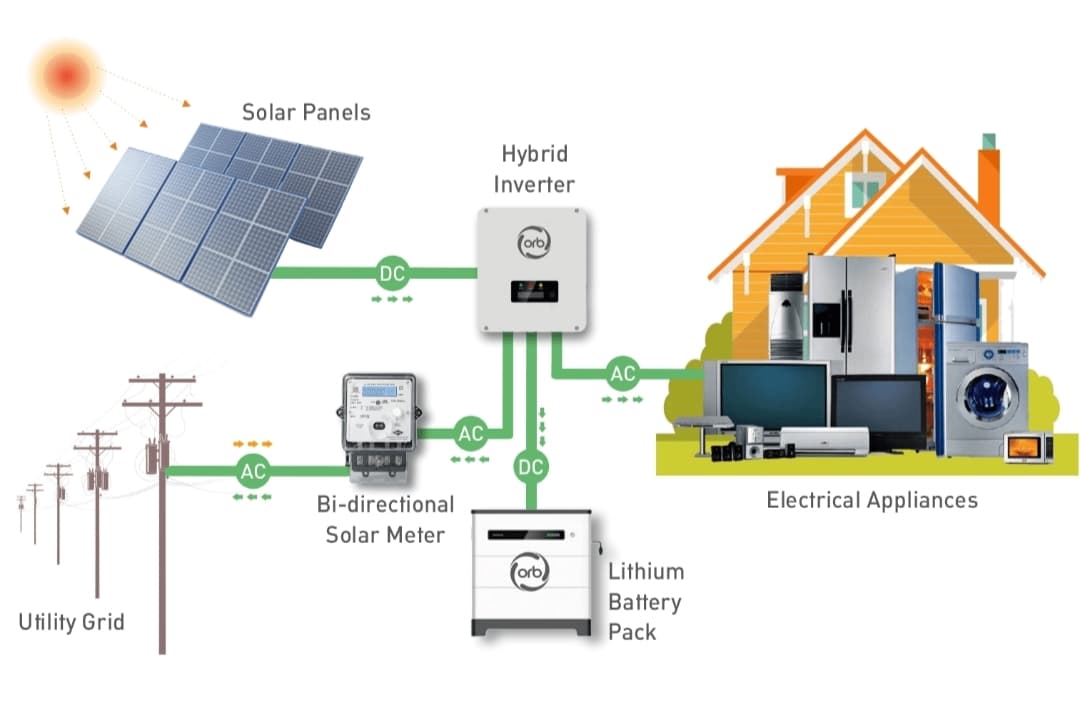
- Solar panels absorb sunlight and convert it into DC.
- The DC goes into the inverter that converts it into AC.
- The AC is fed into a bi-directional meter.
- The meter supplies AC power to your home appliances.
- Excess electricity is exported to the grid.
- At night, electricity is imported back from the grid.
This exchange is called net metering.
PM Surya Ghar: Muft Bijli Yojana (2025)
This flagship scheme provides substantial financial assistance for residential rooftop solar installations. Under this scheme
For 1kW -₹30,000
For 2kW -₹60,000
3 kW to 10kW- ₹78,000
Estimated Rooftop Solar Prices in India (2025)
The cost of a residential rooftop solar system depends on its capacity, the quality of components, and the installer. Before applying the subsidy, you can expect the approximate price range to be:
* 1 kW System: ₹50,000 to ₹70,000
* 2 kW System: ₹1,10,000 to ₹1,60,000
* 3 kW System: ₹1,90,000 to ₹2,50,000
* 5 kW System: ₹2,70,000 to ₹3,60,000
Note: These prices are indicative and may vary. It's always best to get quotes from multiple reputable installers.
Subsidy for Housing Societies
Under the PM Surya Ghar Muft Bijli Yojana, RWAs or housing societies can get subsidy up to ₹18,000/kW fro common facilities usage (up to 500kW).
ROI on the On-Grid Solar System, India
ROI depends on panel type, sunlight received, and discovered rates in your state.
- System Cost: ₹2,80,000 (after subsidy)
- Electricity Tariff: ₹8 per unit
- Monthly Consumption: 580–600 units
- Generation: 580–600 units/month
- Break-even point: 4–5 years.
- Total Savings: ₹11–12 lakh in 20 years.
Benefits of Installing On-Grid Solar
- Easy to track electricity generation.
- Understandable solar electricity bills.
- Free solar electricity after break-even (20+ years).
- Huge reduction in monthly bills.
- No batteries required (grid acts as storage).
- No replacement costs for batteries.
- Most affordable solar system type.
- Subsidy available only for on-grid systems.
Conclusion
On-grid solar systems are the best option for Indian households due to affordability, government subsidies, and long-term savings. By switching today, you can ensure energy independence and financial stability for decades.